Immediate leak stop (temporary dry-in)
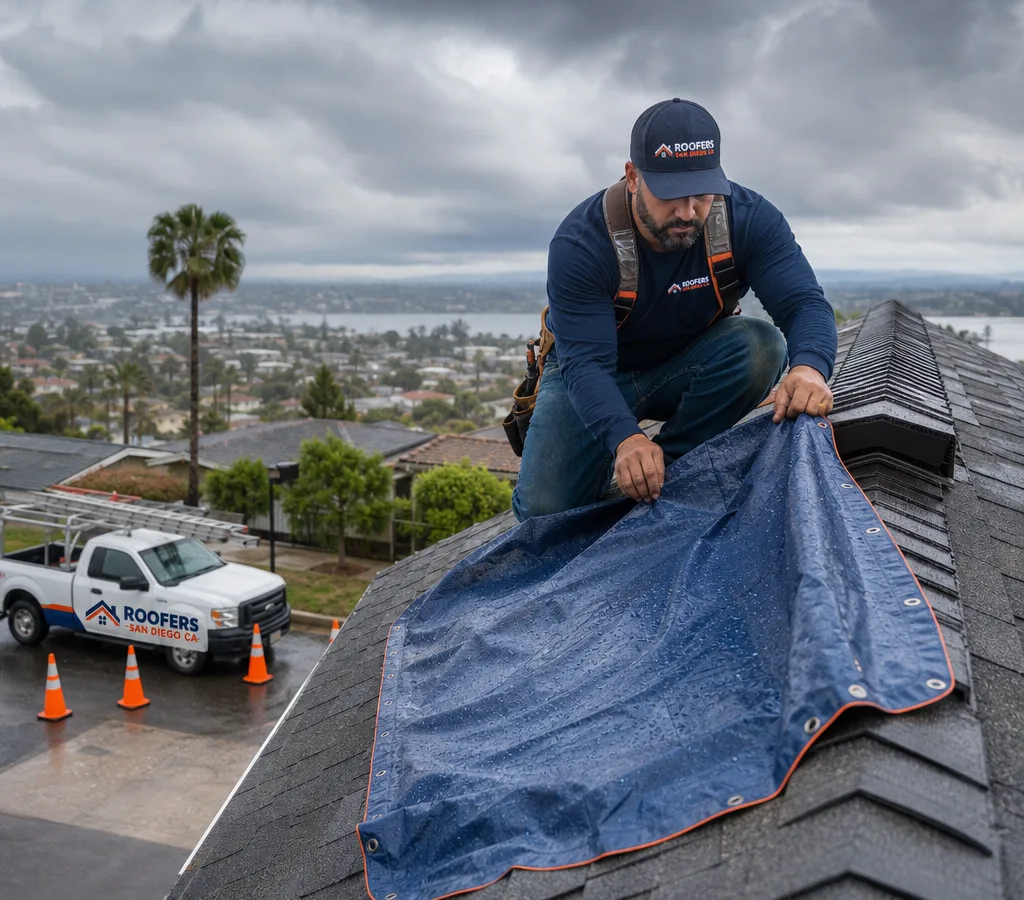
We use tarping, reinforced plastic, and roof-safe fasteners, plus targeted sealing around the entry point, to stop water while protecting shingles, tile, or flat roofing from unnecessary damage.
Serving San Diego, California & surrounding areas
Active leaks and storm damage
Active leak, wind damage, or a fallen branch? Get a fast response, a safe temporary stop to the water, and a clear repair plan you can approve before work continues.
Urgent roof conditions
If water is entering the home, the roof has lifted or blown off in sections, a tree limb punctured the deck, or there is visible sagging, you need emergency roof repair in San Diego right away. The goal in the first visit is to stop active intrusion and reduce risk. The permanent fix can follow once the roof is dry enough to repair correctly.
In San Diego, emergency calls often come after short, intense rain cells, gusty winds, or debris impact. Even a small opening can push water into underlayment seams, attic insulation, and drywall. If you smell dampness, see bubbling paint, or find water around can lights or vents, treat it as urgent.
Roofers San Diego CA focuses on rapid stabilization first, then a durable repair that matches the existing system as closely as possible. If you are deciding who to hire, a good emergency contractor should be able to explain what they can do immediately (temporary dry-in) versus what must wait (full replacement of wet materials, matching tile work, or larger flashing rebuilds). You can also get a sense of our approach and service area from our roofing contractors in San Diego.
Emergency response
We use tarping, reinforced plastic, and roof-safe fasteners, plus targeted sealing around the entry point, to stop water while protecting shingles, tile, or flat roofing from unnecessary damage.
We evaluate hazards first: slippery slopes, power line proximity, fragile clay/concrete tile, and areas that should not be walked until secured.
You get a written explanation of what failed (flashing, broken tile, puncture, lifted shingles, open seam) and what a lasting repair requires, not just a patch.
Emergency work is done with compatible materials, whether the roof is composition shingle, tile, or a common flat system. The goal is to avoid a temporary fix that creates future leaks.
We document damage and repair steps so you have a clear record for your file, your property manager, or your adjuster if you are making a claim.
First-visit priorities
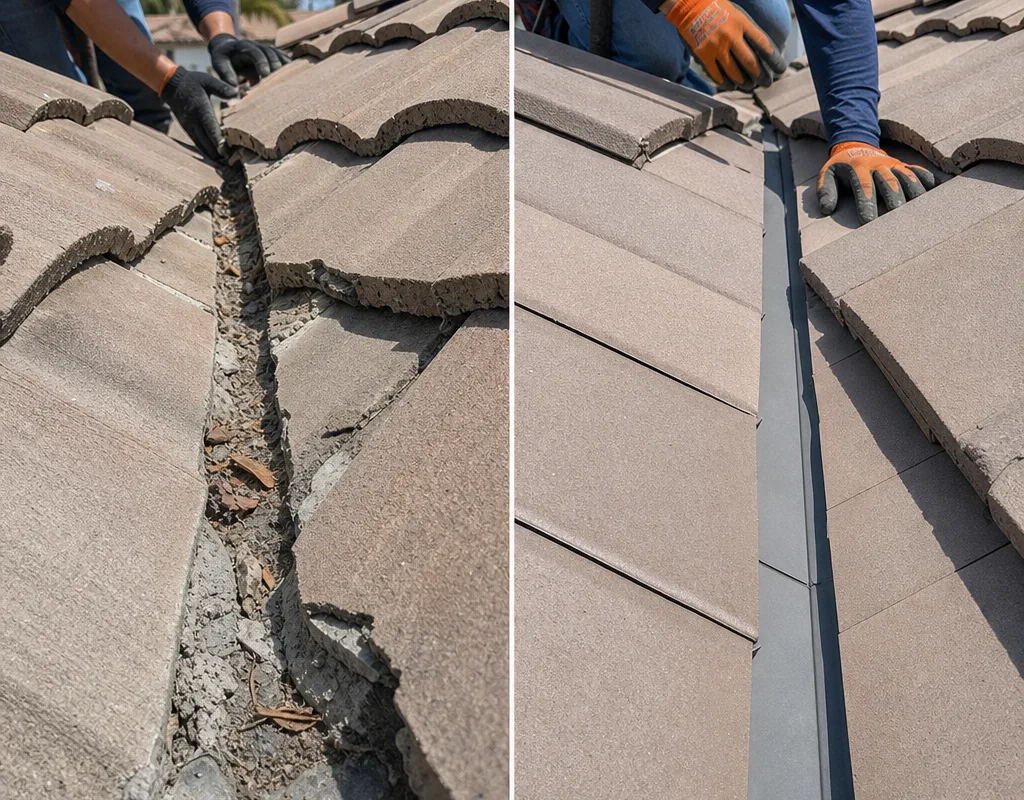
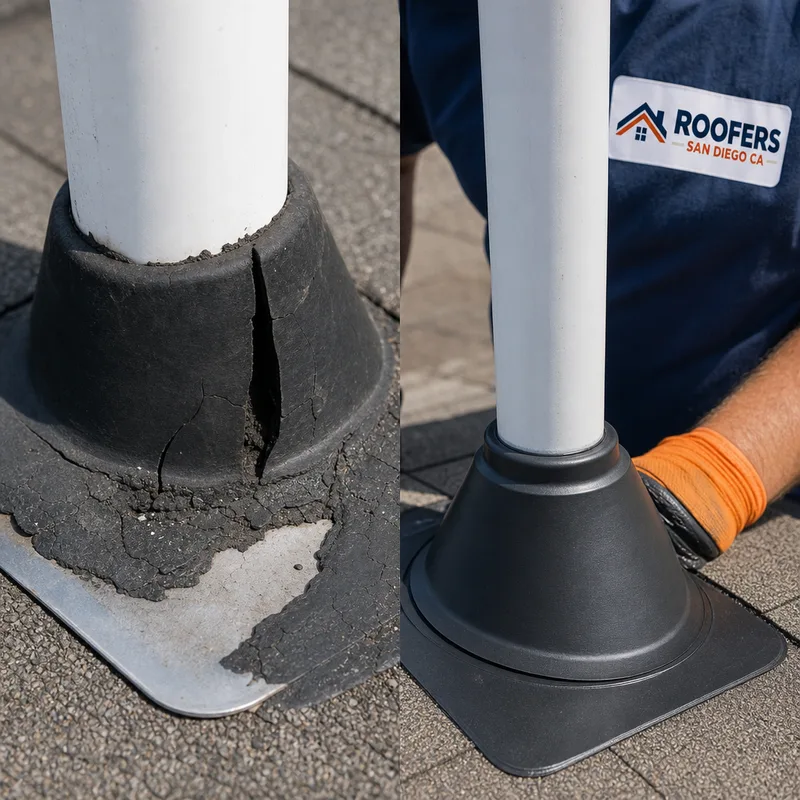
The first visit is about stopping water and preventing the opening from getting worse. We start by locating the entry point (which is not always directly above the interior stain). Common leak paths include failed pipe boot flashing, separated counter-flashing at a wall, exposed nail heads, cracked tile in a valley, and open laps on low-slope roofs.
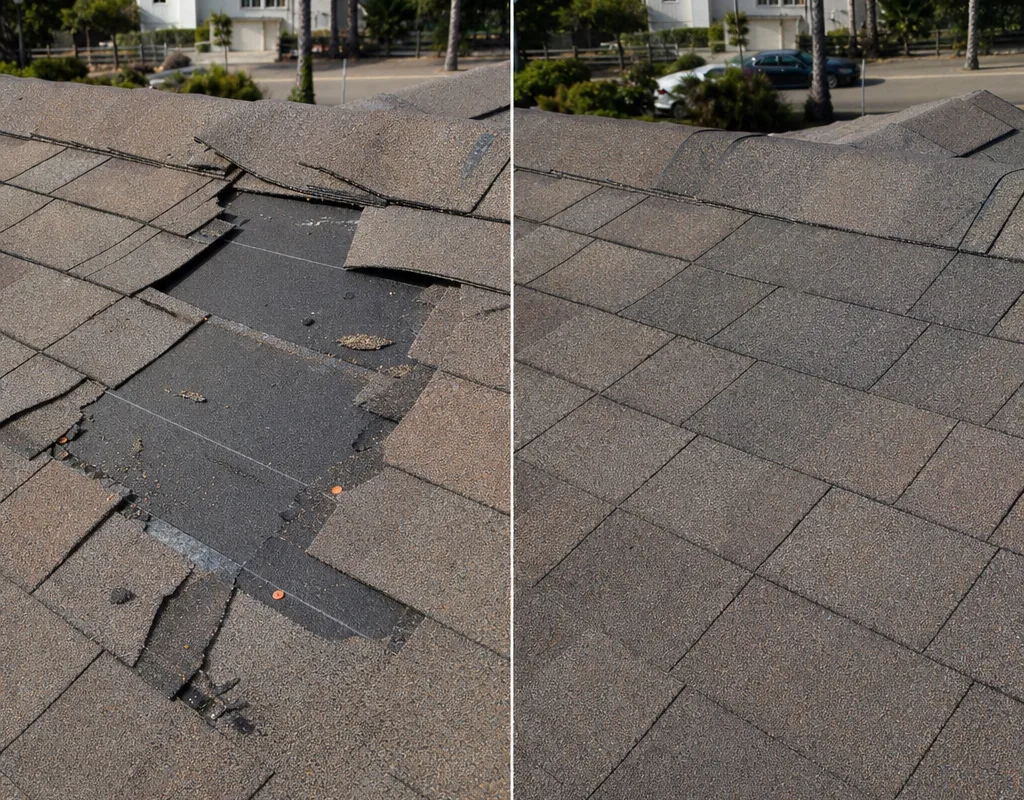
Once the source is confirmed, we dry-in the roof. That can mean tarping a section, replacing a small number of shingles or tiles, securing loose flashing, or temporarily sealing an exposed fastener line. If the roof has multiple active leak points, we triage: stop the largest intrusion first, then protect secondary areas.
After the roof is stabilized, we outline the permanent repair. That may include replacing underlayment in a localized area, rebuilding flashing around chimneys or sidewalls, resetting tiles, or repairing a flat-roof seam. On older roofs, we will also tell you if the emergency problem is a symptom of broader wear so you can decide whether to repair now or plan a larger project later.
San Diego homes often have tile roofs that look intact from the street but can crack from impact or foot traffic. We take extra care when moving across tile because breaking additional pieces during an emergency visit helps no one.

Assessment to final check
01
You tell us what you are seeing inside (dripping, ceiling stain, wet wall) and what happened outside (wind, branch impact, missing pieces). We inspect the roof surface, penetrations, and transitions to confirm the true entry point.
02
We install a temporary dry-in or complete a small permanent repair immediately when conditions allow. The right choice depends on slope, material type, and whether the area is saturated.
03
We provide photos and a plain-language scope: what failed, what we did right away, and what needs to be repaired or rebuilt for a long-term fix.
04
When the roof is safe and workable, we complete the lasting repair using proper flashing details, compatible materials, and manufacturer-appropriate fastening and sealing practices.
05
We re-check the area and, when practical, confirm the repair holds under controlled water flow so you can move forward with interior drying and restoration.
Emergency repair pricing
Emergency roof repair in San Diego typically ranges from about $350 to $1,500 for a service call that includes inspection and a basic temporary dry-in or small repair; more complex issues can run $1,500 to $4,000+ when flashing rebuilds, tile resets, or larger low-slope membrane repairs are needed. Price depends on roof type (tile, shingle, flat), pitch and access, how much area must be tarped or rebuilt, and whether materials are wet or brittle and require careful removal. Exact cost is confirmed after the on-site inspection and a written scope.
Repair examples
Common questions
Response time depends on current call volume and weather conditions, but the priority is same-day stabilization when there is active water entry. The first objective is a safe dry-in (often tarping or localized sealing) so interior damage does not continue while you plan the permanent repair.
Move items away from the leak, place a bucket, and protect floors with towels or plastic; if a ceiling is bulging, avoid the area and consider controlled drainage by a qualified professional. Do not go onto the roof in wet or windy conditions. Photos of the interior stain and any visible exterior damage help speed up diagnosis once we arrive.
Tarping during rain or after dark is sometimes possible, but safety decides. Wet tile and steep slopes can be dangerous, and high winds can make tarps unsafe to handle. When conditions do not allow full roof access, we focus on the safest stabilization steps first and return as soon as it is safe to complete the dry-in.
A correctly installed tarp usually stops active intrusion at that location, but it is a temporary measure. Water can still travel along underlayment, seams, or around penetrations, so we confirm the leak source and cover enough area above it to account for how water moves on your roof type.
Yes. Tile roofs require careful movement and correct reset practices because broken pieces and disturbed laps can create new leak points. In an emergency, we focus on the cracked or displaced tiles, the underlayment condition beneath them, and the flashing at valleys, walls, and penetrations where leaks often start.
Yes. We provide photos and a written description of observed damage and the work performed to stabilize and repair the roof. Your insurer and adjuster determine coverage, but clear documentation of storm impact, displaced materials, and the emergency dry-in work is helpful for the claim record.
No. Water can travel along rafters, underlayment, and attic framing before it shows up inside, so the stain is often downhill or offset from the actual entry point. A proper emergency inspection traces the path and verifies the source before sealing or replacing materials.
Request roof help
Describe what happened and what you are seeing inside. Roofers San Diego CA will respond quickly, secure the roof with a safe dry-in when needed, and provide a clear plan for the permanent repair.