Code-aware work and inspection readiness
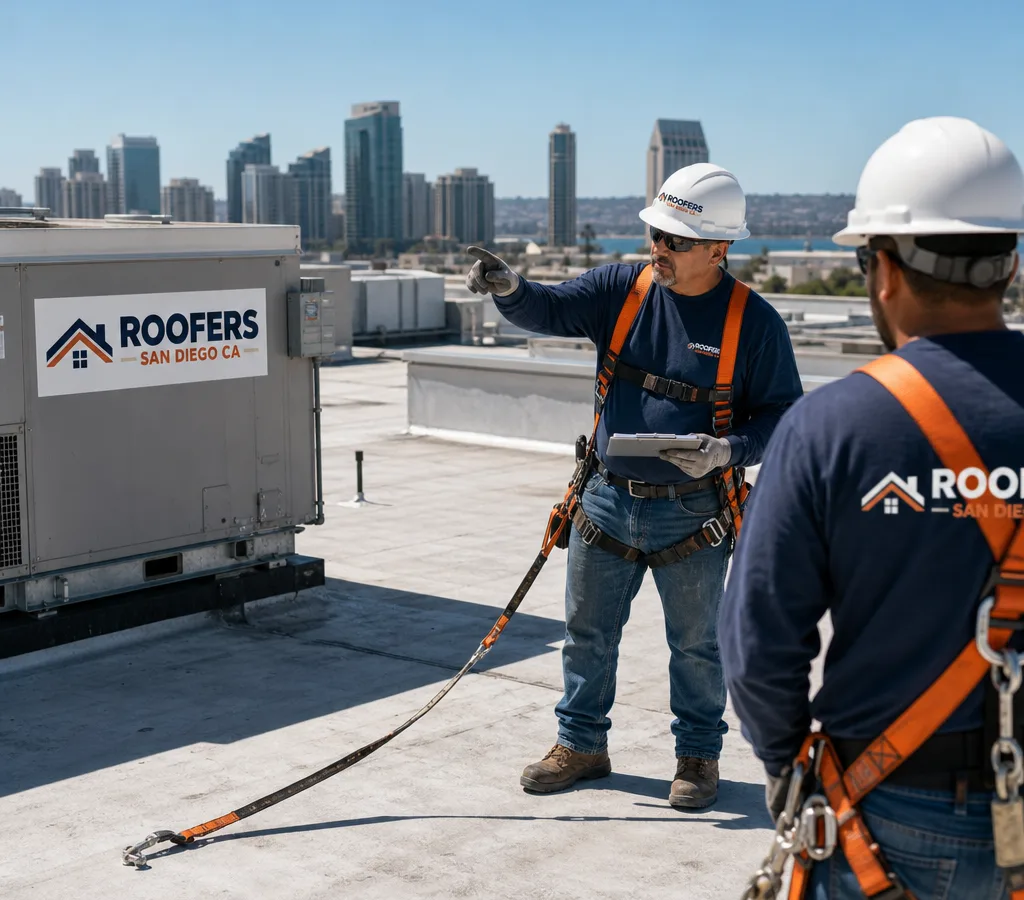
Commercial roofing often touches structural loading, fire ratings, and edge metal requirements. We build scopes that make sense to inspectors and document what is being installed and where.
Serving San Diego, California & surrounding areas
Flat and low-slope roofs
Get a clear scope, code-aware recommendations, and a work plan that keeps your building protected with minimal disruption to tenants and operations.
Commercial roof planning
If you are searching for San Diego commercial roofers, you are usually balancing three things at once: protecting the building, keeping tenants or staff moving, and getting work that passes inspection the first time.
At Roofers San Diego CA, we handle commercial roofing as a planning job as much as a construction job. That means a written scope, a realistic schedule, and material choices that match your building type and risk profile—foot traffic, rooftop equipment, drainage, and how quickly a leak needs to be stopped.
In San Diego, many commercial properties are low-slope systems. They perform well when details are done right: flashing at parapets and penetrations, properly installed terminations, positive drainage planning, and a maintenance plan that catches small problems before they turn into interior damage.
You can also learn about our broader capabilities as roofing contractors serving San Diego, CA if you are comparing contractors for multiple buildings or property types.
Commercial roofing priorities
Commercial roofing often touches structural loading, fire ratings, and edge metal requirements. We build scopes that make sense to inspectors and document what is being installed and where.
We start with diagnosis: entry point, path of water travel, and condition at flashings and penetrations. That leads to repairs that hold, not repeated patch cycles.
Staging, noise timing, access routes, and protection for entries and parking areas are planned up front so your tenants, customers, and staff can keep moving.
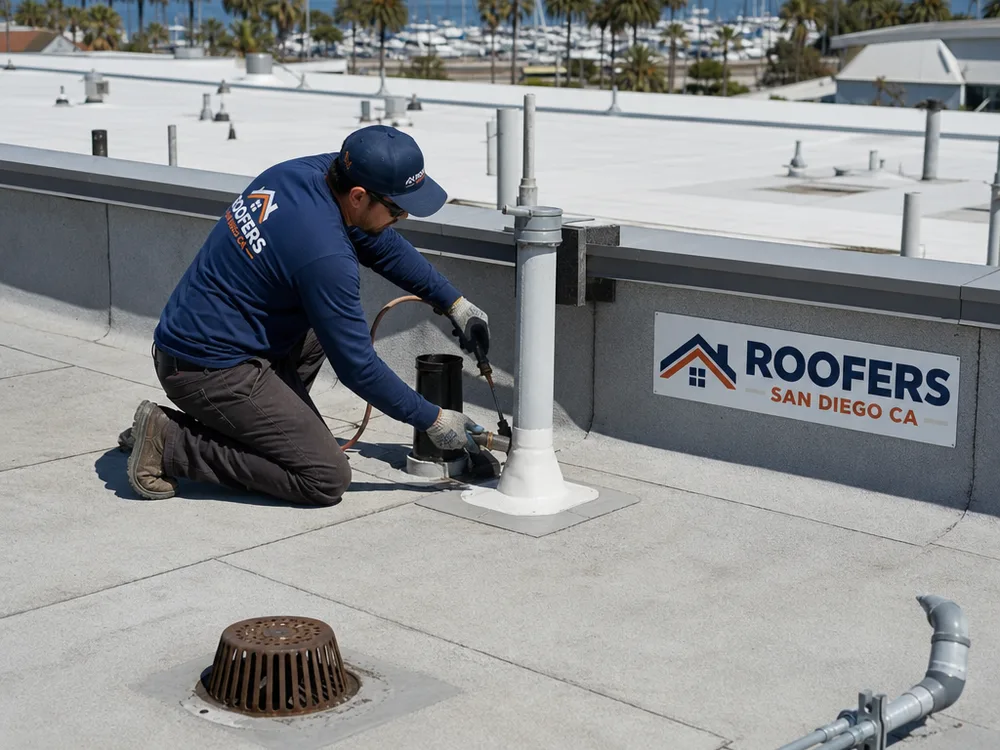
On flat and low-slope roofs, drains, scuppers, crickets, and ponding areas matter as much as the membrane. We address the details that drive premature failures.
You get a written scope and clear next steps. For property managers, that means an easier approval process and fewer surprises during the work.
Systems and service scope
Commercial buildings in San Diego range from older, built-up roof (BUR) assemblies to newer single-ply and coated systems. The right approach depends on the deck type, insulation, drainage, existing layers, and what is happening on the roof—HVAC service traffic, solar, vents, and tenant equipment.
Common commercial roof work includes:
We work with offices, retail, multi-tenant buildings, and warehouse-style facilities. In areas like Downtown and East Village, access and staging matter as much as the roofing scope. Around Kearny Mesa and Miramar, larger roof footprints and rooftop equipment can drive phasing and safety planning. In Mission Valley, drainage planning is often front and center because water management is the difference between a dry building and recurring ceiling stains.
If your property is in our service area, we can typically schedule an on-site walk-through quickly and give you a written plan for repair or replacement options.
Assessment to closeout
01
We review roof access, safety needs, drainage points, penetrations, edges, and any visible membrane damage. If there is active leaking, we focus first on identifying likely entry locations and water travel paths.
02
You receive a scope that fits what the roof needs: repair, restoration, or replacement. When there are multiple viable approaches, we outline tradeoffs like disruption, risk, and expected maintenance.
03
We coordinate access—ladders, hatches, and escorts—along with staging and work hours. For multi-tenant buildings, we can support advance notice planning so tenants know what to expect.
04
Commercial roofing succeeds or fails at details. We focus on flashings, terminations, transitions, and drainage rather than treating the job like a simple surface install.
05
We walk the completed work with you, confirm drainage and vulnerable areas, and recommend a maintenance cadence that fits your roof type and rooftop activity level.
Commercial roof budgeting
Commercial roofers typically price small commercial roof repairs from about $450 to $2,500, while replacement on larger flat roofs often runs $7 to $14 per square foot depending on the system, tear-off needs, insulation, and detailing.
Your final price moves most with roof size and access, number of penetrations and curbs, drainage corrections, existing moisture damage, and whether the scope is repair versus full replacement. The exact cost is confirmed after an on-site inspection and a written scope.
Common questions
We start by tracing likely entry points—flashings, penetrations, parapet transitions, and drains—and then confirm conditions on the roof surface and at details near where interior staining shows up. On low-slope roofs, water can travel before it appears inside, so diagnosis focuses on paths, not just the nearest wet ceiling tile.
Yes. We take on targeted repairs, restoration scopes where the roof is a good candidate, and full replacement when the existing system is at the end of its service life or has widespread failure. The recommendation depends on the roof condition, number of previous layers, drainage performance, and how critical downtime avoidance is for your tenants or operations.
Most commercial replacements take several days to a few weeks depending on roof size, tear-off requirements, access constraints, and the amount of detailing around equipment and parapet edges. After an on-site assessment, we provide a schedule that includes staging, dry-in planning, and any phased work needed to keep the building protected.
Often, yes. Commercial roofing can be scheduled to reduce disruption by planning material staging, controlling noise windows, and setting safe access routes away from entrances and high-traffic areas. The right plan depends on your building layout and roof access points.
The biggest drivers are roof size, access and staging, tear-off versus overlay, insulation upgrades, drainage corrections, and the number of penetrations and curbs that need new flashings. Flat roofs with lots of rooftop units or frequent service traffic usually require more detail work and protection planning.
Ask for a written scope that names the roof areas being addressed, how flashings and penetrations will be handled, what the dry-in plan is if weather changes, how drainage will be checked, and what documentation you will receive at closeout. You should also ask who will coordinate access and safety for tenants, staff, and other trades working on the roof.
Schedule a site visit
Share what you are seeing—leaks, ponding, aging membrane, or tenant complaints—and we will schedule a site visit to confirm the condition and outline the next steps for repair, restoration, or replacement.