Leak diagnosis and targeted repairs
We trace leaks to their source, which is often flashing, penetrations, valleys, or transitions rather than the field of the roof. Repairs focus on restoring waterproofing, not covering symptoms.
Serving San Diego, California & surrounding areas
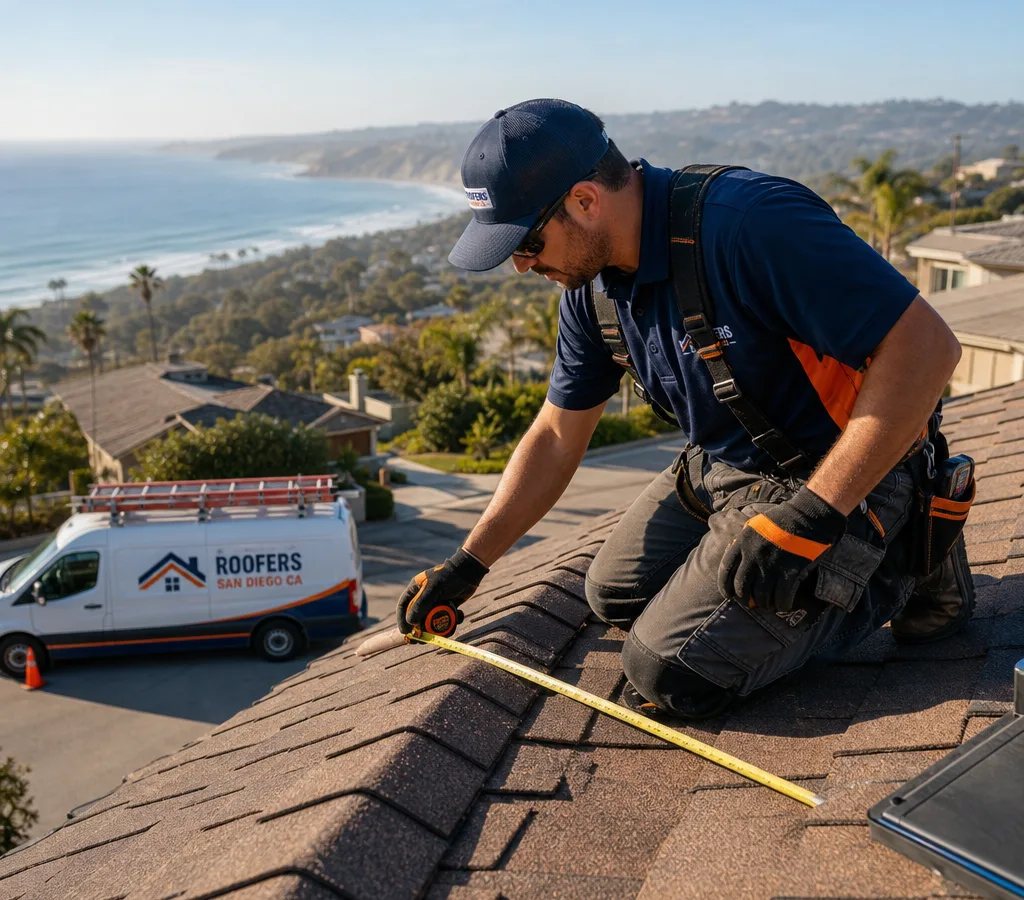
Repairs, replacements, maintenance
Repairs, replacements, and maintenance done with clear scopes, dependable scheduling, and materials that fit your roof and your budget.
Professional roof planning
Most roofing calls come down to one of three problems: a leak that needs a fast, correct repair; a roof that is aging out and needs replacement planning; or a roof that is basically sound but needs maintenance to avoid bigger costs later.
Roofers San Diego CA handles roofing work across San Diego, CA with an inspection-first approach. We start by locating the cause—not just the stain—documenting conditions, and giving you a written scope so you can compare options. In coastal parts of the city, salt air and wind-driven rain can shorten the life of exposed fasteners, flashings, and sealants. Inland neighborhoods run hotter, and that heat cycling can accelerate cracking in older mastics and underlayment.
San Diego has a wide mix of roof styles, including Spanish and Mediterranean tile roofs, low-slope roofs on additions and mid-century homes, and asphalt shingles on many re-roofs. No matter the material, lasting performance depends on proper underlayment, correct flashing, effective drainage, and clean tie-ins at valleys and transitions.
If you are still comparing providers, you can get a quick feel for our approach and service area from our roofers in San Diego, CA.
Roofing capabilities
We trace leaks to their source, which is often flashing, penetrations, valleys, or transitions rather than the field of the roof. Repairs focus on restoring waterproofing, not covering symptoms.
When the roof is at the end of its service life, we help you choose a system that matches the structure, ventilation, and neighborhood exposure.
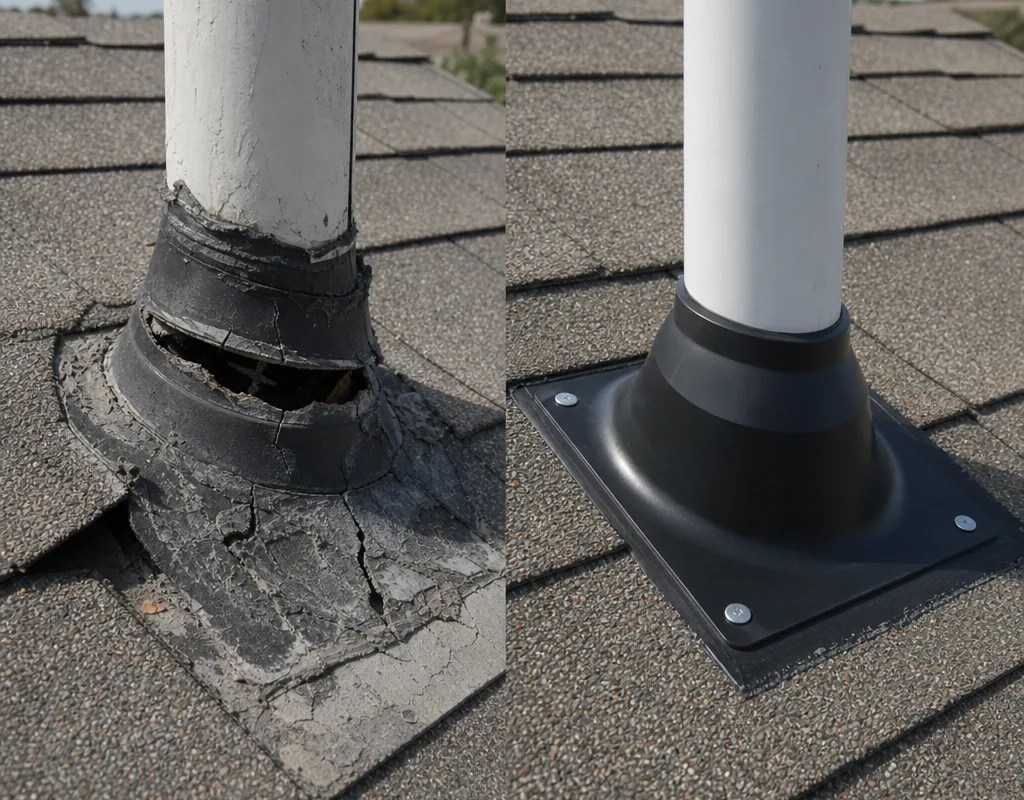
Chimneys, skylights, pipe boots, wall step flashing, and parapet caps are frequent failure points. Correct metalwork and seals help prevent repeat repairs.
We handle broken or slipped tiles, cracked mortar at transitions, and shingle blow-offs or nail pops while avoiding unnecessary disturbance to sound areas.
Patio covers, additions, and low-slope areas need an appropriate membrane or modified bitumen approach plus drainage checks to prevent ponding-related leaks.
Periodic roof checks, debris clearing in valleys, and resealing specific components can reduce emergency calls and extend the time before replacement is needed.
Inspection details
A useful roof inspection gives you more than a yes-or-no answer. On every project, we document the roof type and visible wear, then focus on the details that usually fail first.
Typical inspection checkpoints include:
You will get a straightforward explanation of what is urgent, what can be monitored, and what can wait. If replacement is appropriate, we explain material options and performance details such as flashing upgrades and ventilation adjustments.
In Point Loma and Ocean Beach, coastal exposure makes corrosion resistance and flashing details especially important. In Clairemont and Mira Mesa, sun and heat make UV stability and underlayment condition significant re-roofing factors.
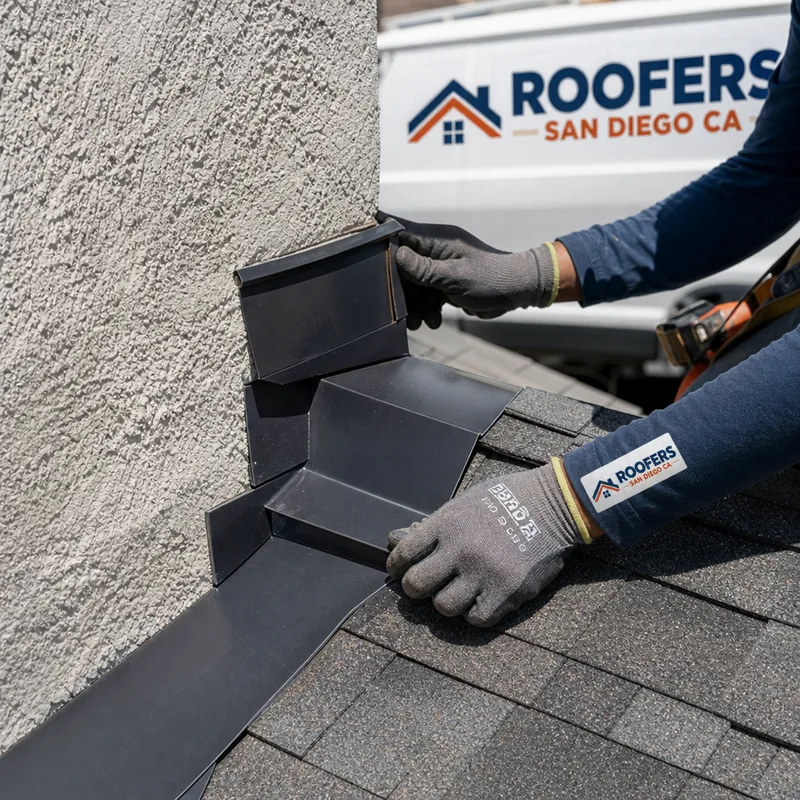
Inspection to completion
01
We confirm access points, protect landscaping and exterior surfaces, and set ladders and fall protection appropriate for the roof pitch and height.
02
For repairs, we locate the true entry point and contributing issues. For replacements, we review the full roof system rather than only its surface material.
03
You receive a clear scope describing the work area, materials, and inclusions. Where choices are viable, we explain differences in longevity, appearance, and budget.
04
We complete the agreed scope, keep the jobsite tidy, and handle debris responsibly. If weather changes scheduling, we communicate early and protect exposed areas.
05
We review completed work, confirm that flashing and terminations are secure, and answer maintenance questions so you know what to watch over time.
Planning your project
Roofing in San Diego typically ranges from about $350 to $1,500 for many common repairs, while full roof replacement most often lands around $9,000 to $30,000+ depending on roof size, pitch, layers, and material, including shingle, tile, or low-slope systems.
Your final cost changes with tear-off needs, decking repairs, flashing complexity, access and staging, and whether transitions between roof types require custom detailing. The exact price is confirmed after an on-site inspection and a written scope that matches your roof's conditions.
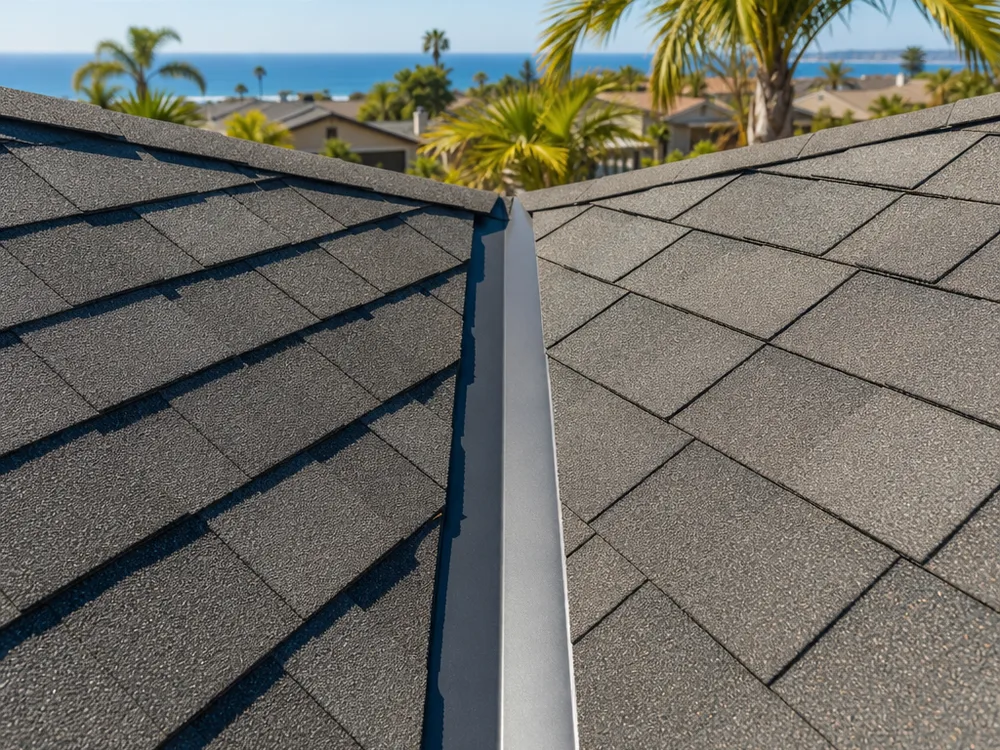
Completed roof details
Common questions
Leak response depends on weather and workload, but urgent leak diagnostics can often be scheduled quickly when active water intrusion is happening. The priority is making the leak safe first, then addressing flashing, penetrations, or transitions that commonly cause leaks.
A repair is often suitable when the problem is localized and surrounding materials remain sound. Replacement makes more sense with widespread wear, repeated leaks, failing underlayment, or multiple existing layers. An inspection should document the condition with photos and a written scope.
Asphalt shingles, concrete or clay tile, and low-slope membranes are all common. The right system depends on roof pitch, deck and underlayment condition, roof geometry, and exposure factors such as coastal salt air or inland heat.
Most leaks come from failed flashing, cracked boots, aged sealants, or improper integration with the underlayment rather than the vent or skylight itself. A correct repair rebuilds the flashing assembly so water sheds properly.
Many residential replacements can be completed in a few days, but timing changes with roof size, steepness, layers to remove, tile handling, and deck repairs. In dense areas such as North Park or Hillcrest, staging and hauling logistics may also affect the schedule.
A solid estimate should specify the work area, tear-off and disposal, underlayment, flashing work, ventilation considerations, wood-repair handling, material brand or grade where applicable, and the cleanup plan for nails and debris.
Schedule an inspection
Tell us what you are seeing, and we will schedule an on-site inspection, review options, and provide a written scope you can trust for repairs or replacement.