Source-finding, not guesswork
We trace water entry points at flashings, penetrations, edges, valleys, and transitions. Interior stains help, but the exterior detail is what determines the fix.
Serving San Diego, California & surrounding areas
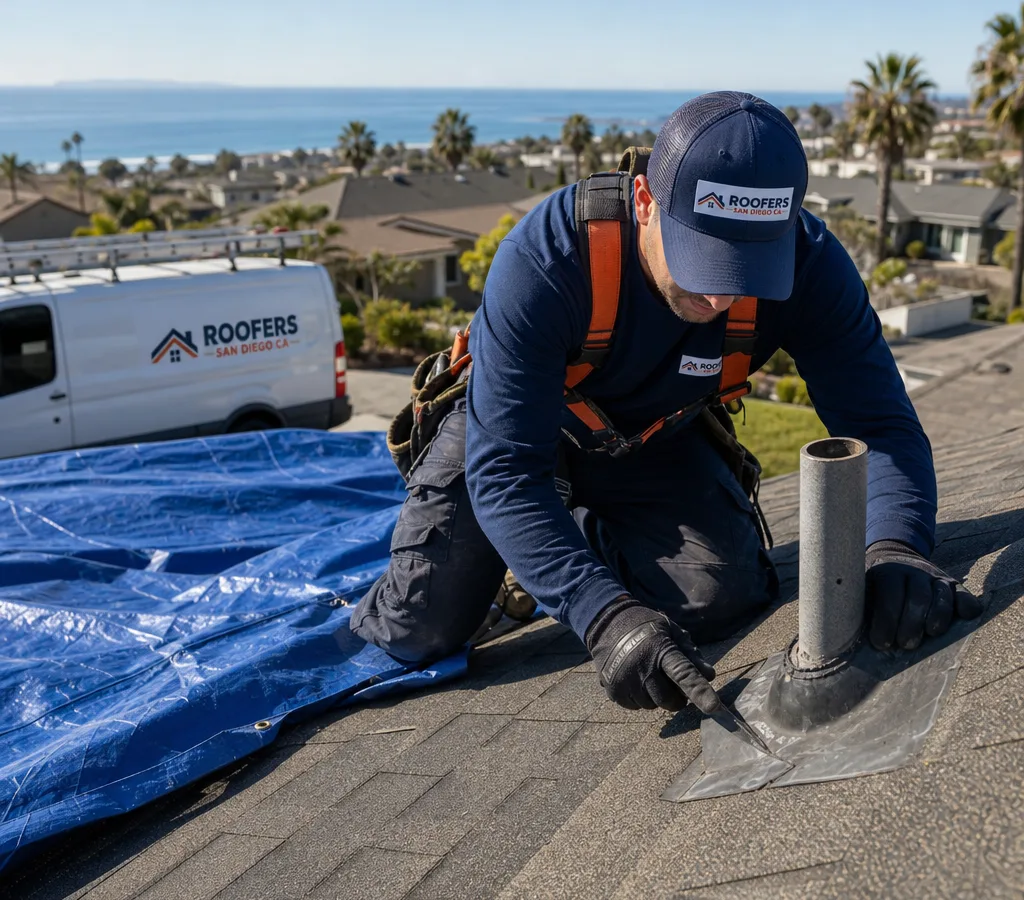
Find the source first
Stop the drip fast with a careful inspection, clear repair plan, and workmanship that holds up to coastal sun, wind, and seasonal rain.
Professional leak diagnosis
A roof leak usually means one urgent problem: water getting past the roofing system and into the attic, ceiling, or walls. A small leak can spread quickly, especially when wind pushes rain under flashing or when water follows a rafter and shows up far from the real entry point.
Roofers San Diego CA focuses on pinpointing the source first, then repairing the actual failure point, not just the stain inside. We document what we find, explain the repair options in plain language, and keep the work area clean. Whether the leak started after a storm, showed up around a vent, or appeared at a ceiling seam with no obvious cause, the goal is the same: locate, seal, and verify.
San Diego homes see a mix of roof styles and ages. In older areas like North Park and Hillcrest, we often find layered repairs from past owners that hide cracked flashings or old penetrations. Near the coast in Point Loma and Ocean Beach, salt air and sun can accelerate wear on exposed sealants and metal edges. In Mission Valley, complex rooflines and transitions around additions can create hidden water paths. The fix depends on the roof you have and where it's failing, not a one size approach.
If you want to learn more about our company and service area, you can start with our roofing in San Diego overview.
Repair essentials
We trace water entry points at flashings, penetrations, edges, valleys, and transitions. Interior stains help, but the exterior detail is what determines the fix.
Repairs may involve replacement flashings, compatible sealants, underlayment patches, fastener corrections, or tile reset work, depending on what the roof system allows.
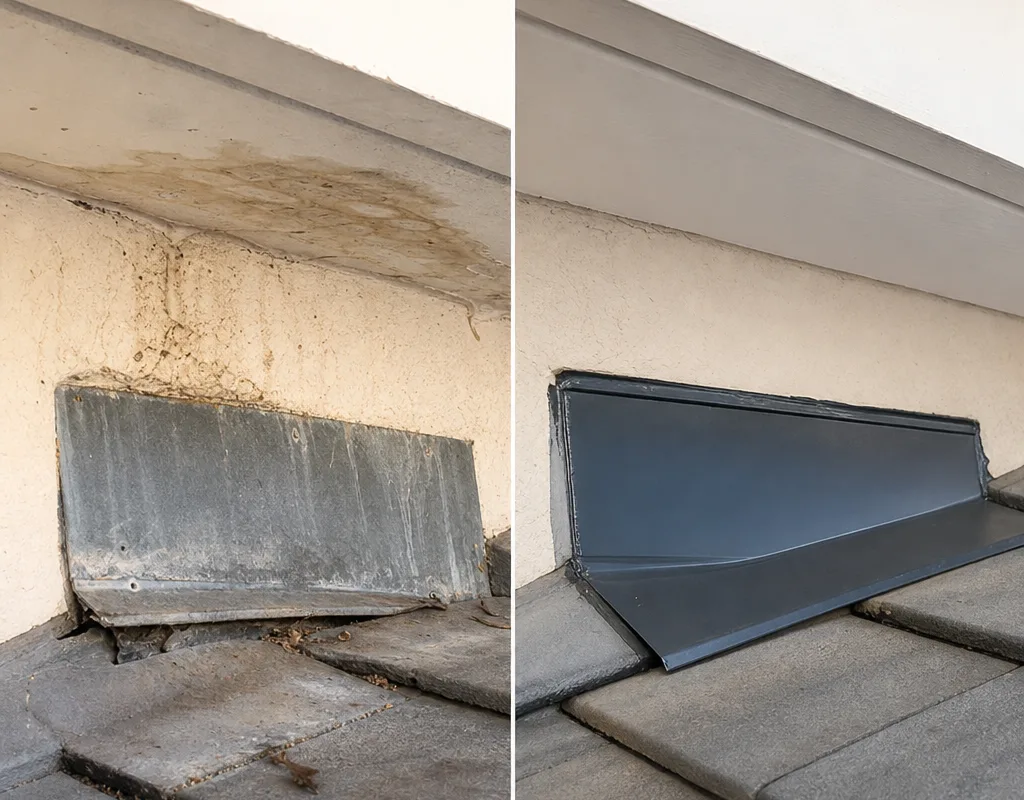
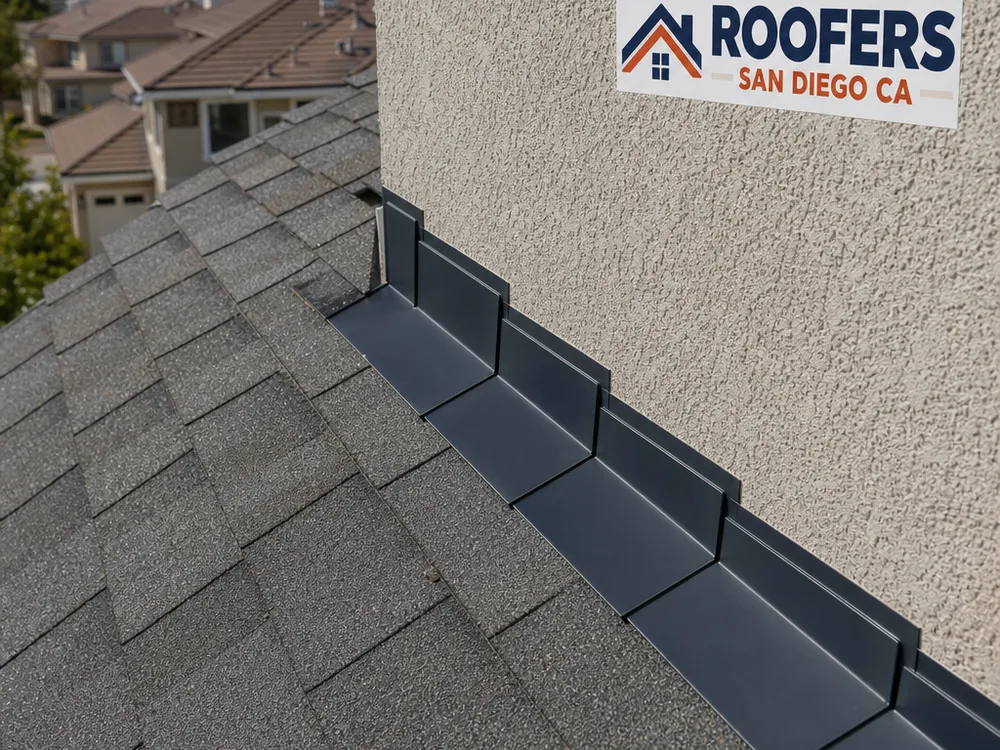
Many leaks come from small details: pipe boots, vent stacks, step flashing at sidewalls, counterflashing, chimney and cricket areas, or missing kick-out flashing where a wall meets a roof edge.
We protect the area below, manage debris, and keep loose materials controlled so you're not left with nails, granules, or scraps around the property.
You get a written explanation of the likely cause, the proposed repair, and any related concerns we can see during the inspection.
Inspection details
A roof leak is usually a flashing or penetration problem first, and a shingle or tile problem second. Water often enters at a detail and then travels along the roof deck or framing until it finds an opening into the living space.
Typical culprits include:
When the leak is intermittent, we focus on conditions that make it appear: wind direction, rainfall intensity, and where the roof changes pitch or meets a wall. In coastal parts of San Diego, sun exposure can age exposed sealants faster, so we avoid quick caulk-only approaches unless the roof detail is designed for it.
If you also suspect the roof has broader wear beyond a single leak point, we'll say so during the visit and separate immediate leak repair from longer-term options so you can make a clear decision.
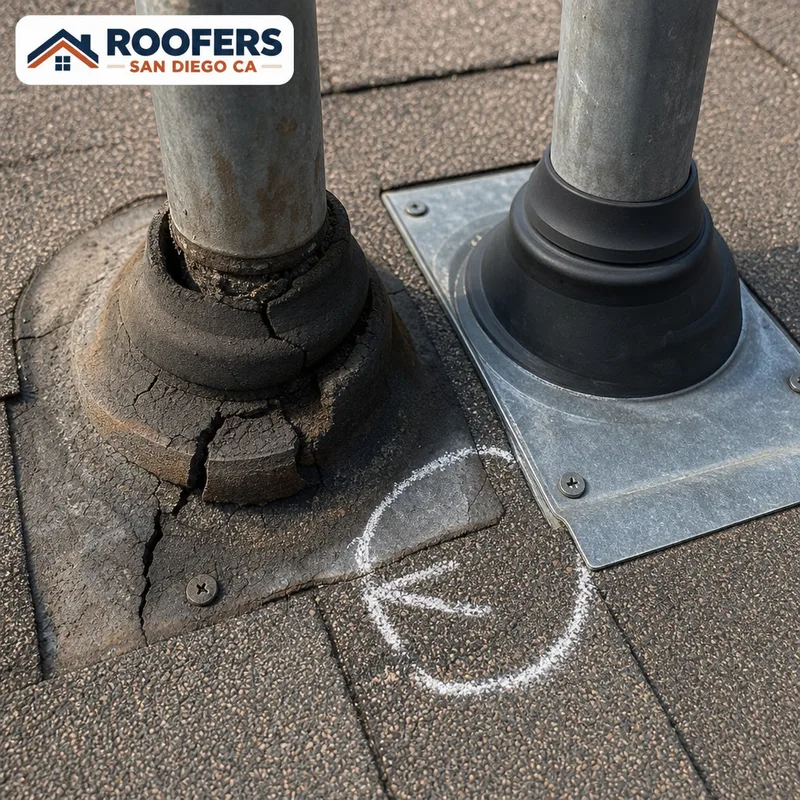
Inspection to repair
01
We'll ask where you see water, when it happens, and whether you've noticed dripping, bubbling paint, attic moisture, or a musty smell. This helps narrow the likely leak path before anyone climbs a ladder.
02
We inspect the roof surface and the most common failure points first, then check attic areas for wet decking, stained rafters, or daylight at penetrations when access allows.
03
We trace the water path to the most probable entry detail. When needed, we isolate sections and check laps, flashing steps, fasteners, and transitions to find what's actually letting water in.
04
Depending on the roof type, we may replace flashing, reset tile, repair underlayment in a localized area, replace damaged shingles, or correct improper terminations. The goal is a repair that matches how the roof is designed to shed water.
05
We verify the repair area, remove debris, and leave you with a clear summary of what was fixed and what to monitor, including any related wear we noticed nearby.
Planning your repair
Roof leak repair in San Diego typically ranges from about $350 to $1,500 for common fixes like replacing a pipe boot, repairing flashing, or sealing a small localized entry point. More involved repairs, such as valley rebuild work, partial underlayment repair on tile roofs, or fixing multiple leak sources, often run $1,500 to $4,000+.
Final price depends on roof type, pitch and access, how hard the leak is to trace, material needs such as flashing metal, underlayment, tile or shingles, and whether there's hidden damage that must be opened up and corrected. The exact cost is confirmed after an on-roof inspection and a written scope.
Documented repair details

Common questions
Response time depends on weather and scheduling, but urgent active leaks are prioritized because water damage spreads quickly. If you have dripping, ceiling bubbling, or attic moisture, share when it started and where you see it so we can plan the safest and fastest inspection approach.
Yes, many leaks are repaired by addressing a specific failure point such as flashing, a pipe boot, a vent penetration, or a small damaged area. Replacement is only discussed when the roof system is too worn for a localized repair to hold reliably or when there are multiple active leak sources.
Water can travel along the roof deck, underlayment, rafters, or insulation before it drops into the ceiling, so the interior stain is often not directly under the entry point. That's why our inspection focuses on roof details uphill from the stain and on common pathways like valleys, sidewalls, and penetrations.
Yes. Tile roof leaks often involve broken or slipped tiles, aging underlayment at transitions, or flashing failures at penetrations and walls. The repair may require carefully removing and resetting tiles to access the underlayment and flashing, then restoring the tile layout so water sheds correctly.
Move valuables away from the leak area, place a container to catch drips, and if it's safe, use towels to protect flooring. If you can access the attic safely, avoid stepping on drywall and watch for wet insulation or active dripping. Temporary tarps can help in some cases, but improper installation can create more damage, so it's best to have a professional handle it.
Yes. When we find a leak source, we also inspect nearby penetrations, flashings, and transitions because failures often cluster. You'll get a clear explanation of what we repaired and any adjacent areas that should be addressed soon to prevent the next leak.
Schedule an inspection
Tell us what you're seeing and when it started. We'll schedule an inspection, locate the entry point, and provide a straightforward repair plan with clean, professional workmanship.