Cracked or slipped tiles
We replace broken tiles, reset shifted courses, and verify the tiles around the damage are seated correctly so water cannot run under the field.
Serving San Diego, California & surrounding areas
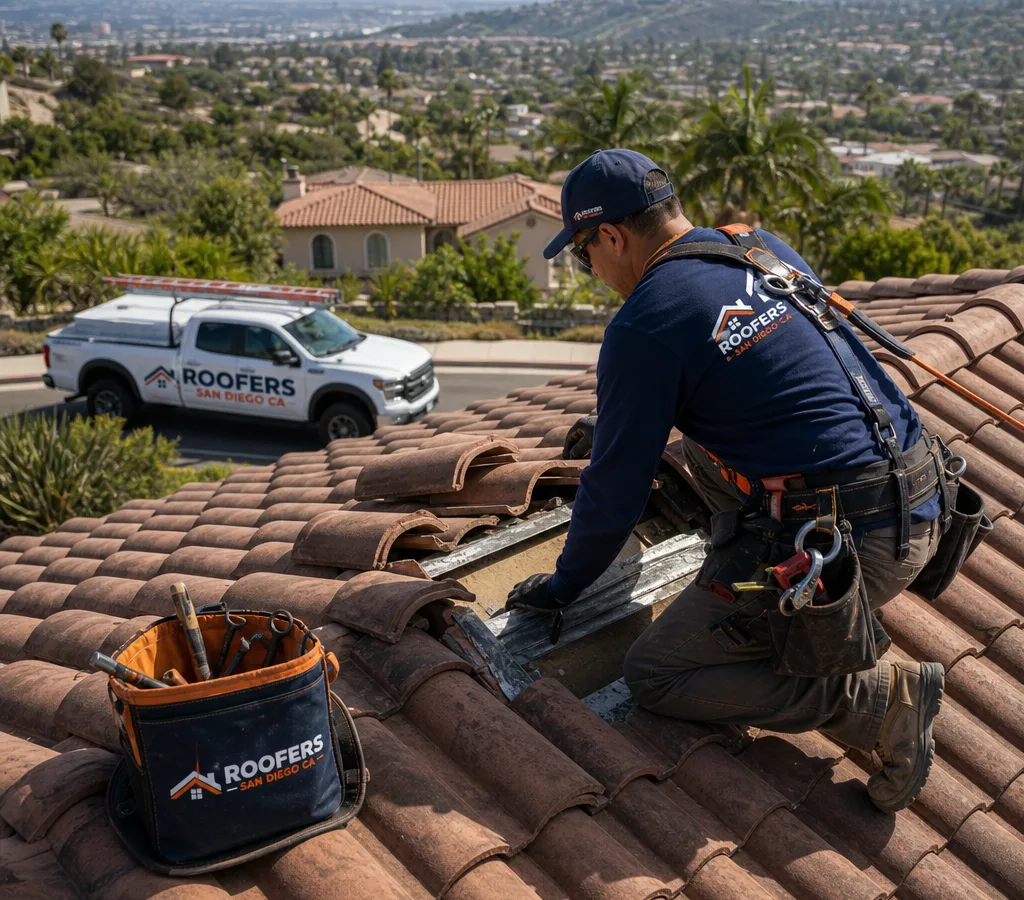
Cracked tiles, leaks, loose ridges
If you have a leak, cracked tiles, or wind-lifted ridge pieces, get a roof tech on-site to pinpoint the entry point and complete a repair that matches your tile and underlayment.
Targeted tile repair
Most tile roof repair calls start with one urgent problem: water getting where it should not. With tile, the visible break is not always the true leak point. Water can travel under tiles along the underlayment, valleys, or around penetrations before it shows up on a ceiling.
Roofers San Diego CA approaches tile repairs as a troubleshooting job first and a replacement job second. We look for the source, document what we find, then repair only what is needed to restore the roof system: the tile, the fasteners or mortar at ridges and hips, the flashings, and the underlayment transitions that do the actual waterproofing.
In San Diego, sun and salt air can age components faster than people expect, and occasional heavy downpours can expose small weaknesses. A proper repair focuses on stopping water intrusion now while protecting the surrounding field tiles so you are not chasing the next leak a month later.
Tile roof repair scope
We replace broken tiles, reset shifted courses, and verify the tiles around the damage are seated correctly so water cannot run under the field.
Valleys and wall transitions concentrate water flow. We check valley metal, underlayment laps, and debris buildup, then repair the waterproofing layers, not just the tile on top.
Loose ridge caps, failed mortar, or lifted ridge pieces can let wind-driven rain in. We re-secure ridge and hip tiles using repair methods appropriate for the existing system.
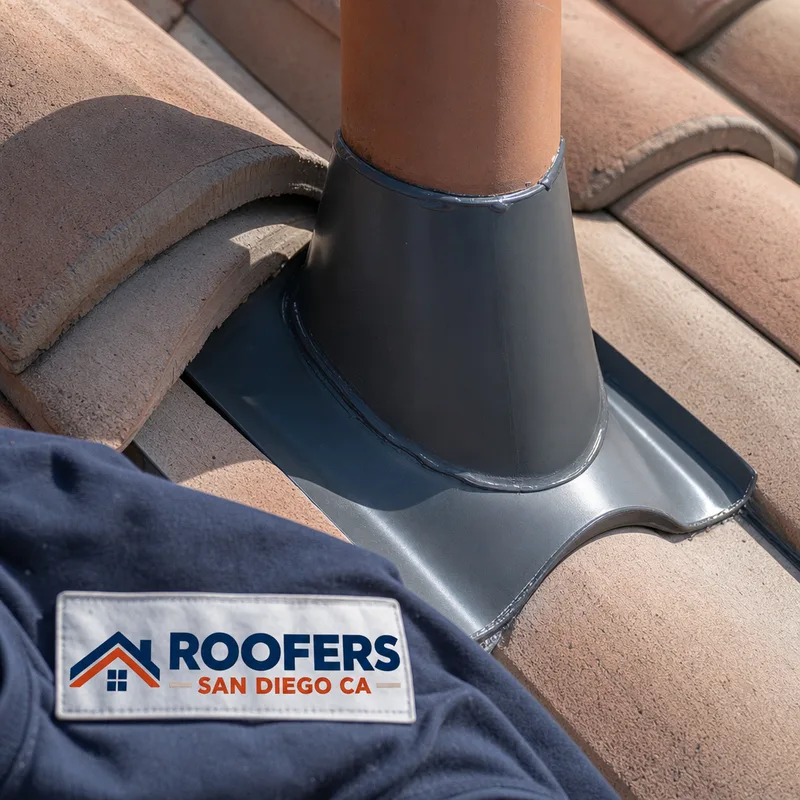
Many tile leaks come from aged or improperly integrated flashing. We correct the flashing and restore the surrounding tile layout so the repair is clean and watertight.
Tile is the wear surface; underlayment is the water barrier. When it is torn, brittle, or poorly lapped in a localized area, we open the necessary section and rebuild the waterproofing correctly.
After a wind event, we look for lifted tiles, displaced ridge caps, and impact cracks, then secure vulnerable areas before the next rain.
Repair details
A lasting tile roof repair is more than swapping a cracked piece.
We typically:
If you are still evaluating who to hire, you can get a sense of how our team works on every type of roof in San Diego.
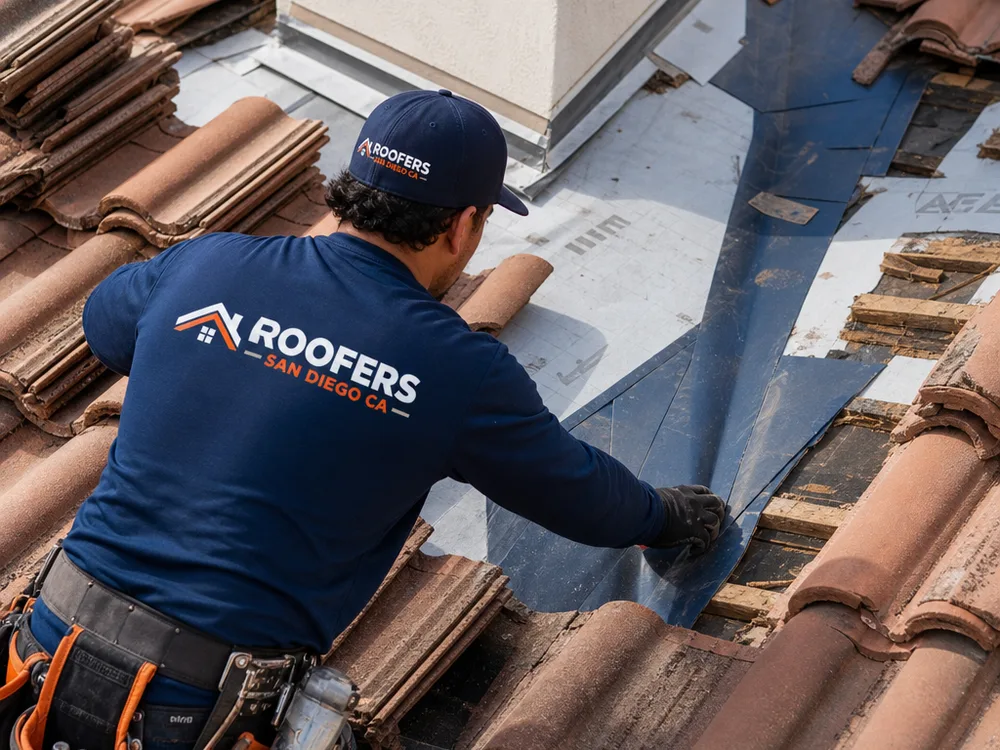
Inspection to repair
01
We start on the roof and at the most likely leak details, then verify how water could travel under tile to the interior symptom.
02
You get a clear explanation of what failed, what must be opened up, and what materials and methods we recommend to restore waterproofing.
03
We lift tiles in the repair area, protect surrounding pieces, and keep courses organized so the roof goes back together cleanly.
04
We address underlayment damage, flashing integration, and any required metalwork so the system sheds water properly under the tile.
05
We reinstall tiles with proper alignment and fastening, replace any broken pieces, and secure ridge or hip components when part of the repair.
Planning your repair
Tile roof repair in San Diego typically ranges from about $350 to $1,500 for small, localized fixes, while larger leak investigations with valley or flashing rebuilds or underlayment work in multiple areas often run $1,500 to $6,000+.
Your price depends on the leak source—tile, underlayment, or flashing—roof height and access, how many tiles must be removed and reset, whether matching replacement tiles are available, and whether ridges or hips need re-securing. The exact cost is confirmed after an on-site inspection and a written scope.
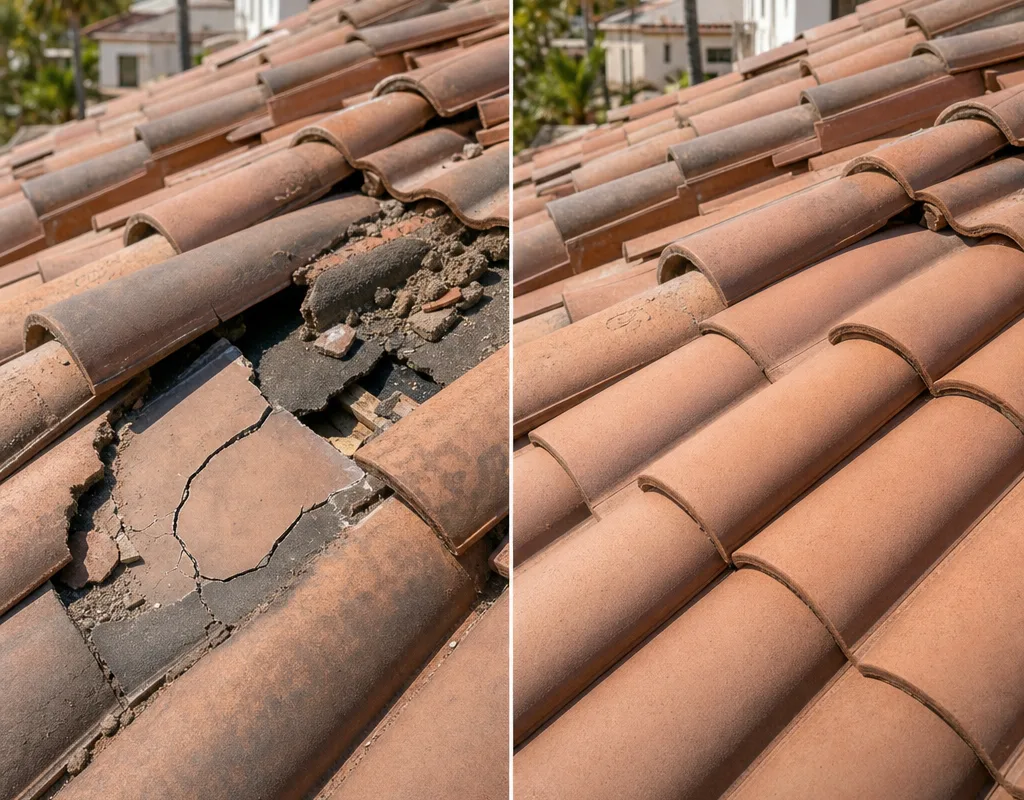
Tile repair examples
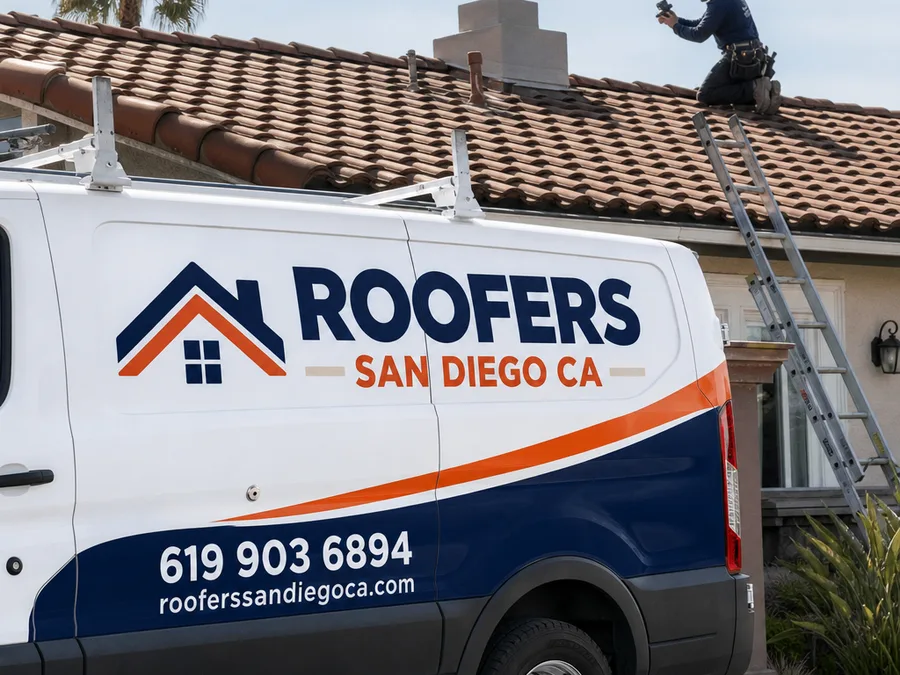
Common questions
Most localized tile repairs take a few hours to a full day, depending on how many tiles must be lifted to reach the underlayment or flashing. If the leak source is in a valley or around a penetration and requires rebuilding waterproofing layers, the work can extend into a second day, especially when drying time or careful tile matching is involved.
Yes, a roof can be repaired safely even when an exact visual match is not available, as long as the replacement tiles match the required profile and install correctly for water shedding. We focus first on compatibility and proper lap; then we do our best to source the closest color and finish so the repair blends in as much as possible.
With tile roofs, water can enter at one point and travel under the tiles along the underlayment until it finds an opening at a seam, nail hole, or flashing edge. That is why the repair starts with leak tracing at common entry points like valleys, sidewalls, chimneys, and pipe flashings instead of replacing the nearest cracked tile and hoping it solves the problem.
Often, yes, because the waterproofing components that failed are usually under the tile surface. A correct repair may require lifting enough tiles to expose intact underlayment laps and sound decking so the repaired section can be tied back in properly, then resetting the tile field without creating new breakage.
No. Some leaks are caused by a cracked or displaced tile, but many start at flashing details, valley metal, or failed ridge and hip attachments. During the inspection we determine whether the issue is the tile itself, the waterproofing layer beneath, or the transitions where water concentrates.
Yes, temporary leak control is possible when conditions make a full repair unsafe or when materials must be sourced first. The goal is to limit interior damage, then return to complete the proper repair once the roof is dry and the scope is confirmed.
Schedule an inspection
Share what you are seeing and when it started, and we will schedule an on-site inspection in San Diego to locate the leak source and provide a written repair plan for your tile roof.